Article
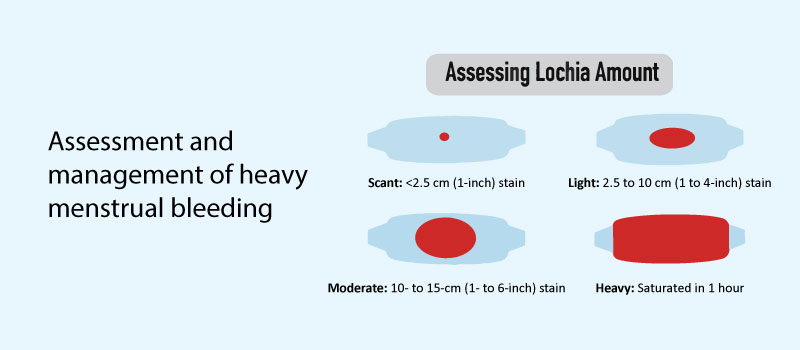
Background:
Heavy menstrual bleeding (HMB), a prevalent and distressing condition, is primarily defined by the patient's perception and observable signs like frequent pad or tampon changes, large clots, and disruption of daily activities.

Women with HMB often experience reduced health-related quality of life, attributed to irritation, inconvenience, associated pain, self-consciousness, and social embarrassment.
Despite its impact, less than half of those with heavy bleeding seek medical assistance, leading to suboptimal care.
Recommendations on diagnostic evaluation of HMB:
- Perform a complete blood cell count for women reporting HMB, excluding ferritin, thyroid, or hormone testing.
- Evaluate for coagulation disorders, like von Willebrand disease, in women experiencing HMB since the onset of their periods.
- Consider pelvic ultrasonography if the uterus is palpable abdominally or if pelvic examination results are inconclusive; transvaginal ultrasonography is preferred for women with significant dysmenorrhea or a bulky, tender uterus.
- Early outpatient hysteroscopy is recommended during HMB investigations if the patient's history suggests submucosal fibroids, polyps, or endometrial pathology.
- Focus on interventions that enhance the quality of life rather than fixating on blood loss.


Recommendations on treatment of HMB:
- If there is low suspicion of an anatomic abnormality after history and physical examination, contemplate empirical pharmacologic management.
- For women with fibroids smaller than 3 cm without cavity distortion, other pathology, or suspected adenomyosis, consider the Levonorgestrel-releasing intrauterine system (LNG-IUS) as first-line treatment.
- In case of LNG-IUS refusal, discuss non-hormonal options such as Tranexamic acid, nonsteroidal anti-inflammatory drugs (NSAIDs), combined hormonal contraception, or cyclical progestin-only medication.
Conclusion:
In conclusion, regular inquiries about menstrual health in primary care can enhance outcomes and patient contentment. These recommendations offer a structure for the assessment and treatment choices for women experiencing HMB and is applicable in outpatient settings.
Reference:
Douglass LA, Davis AM. Assessment and Management of Heavy Menstrual Bleeding. JAMA. 2020;323(3):270-1.
Articles

Efficacy of Combination Therapy of Mefenamic acid and Tranexamic Acid in Heavy Menstrual Bleedin
Dysfunctional uterine bleeding is excessive, prolonged heavy or frequent bleeding of uterine origin which is not due to pregnancy or any systemic or recognizable pelvic disease.
Case study

Combination therapy with Mefenamic acid and Tranexamic acid in heavy menstrual bleeding: An Interesting Case Report.
A 32-year-old female patient presented with chief complaints of heavy and prolonged menstrual bleeding for the last 7–8 months.

Efficacy of Mefenamic acid and Tranexamic acid in Management of Heavy Menstrual Bleeding: A Case Report
A 40-year-old female patient with complaint of heavy menstrual bleeding.
Blog

Recent Updates on Prevalence and Burden of Heavy Menstrual Bleeding in Society
Heavy menstrual bleeding is a common disorder characterized by excessive blood loss that affects the quality of life of a female in physical, emotional, social and financial aspects.

The ICMR recommendations on the management of heavy menstrual bleeding
It is crucial to obtain a medical history for complete understanding of the current bleeding episode.